

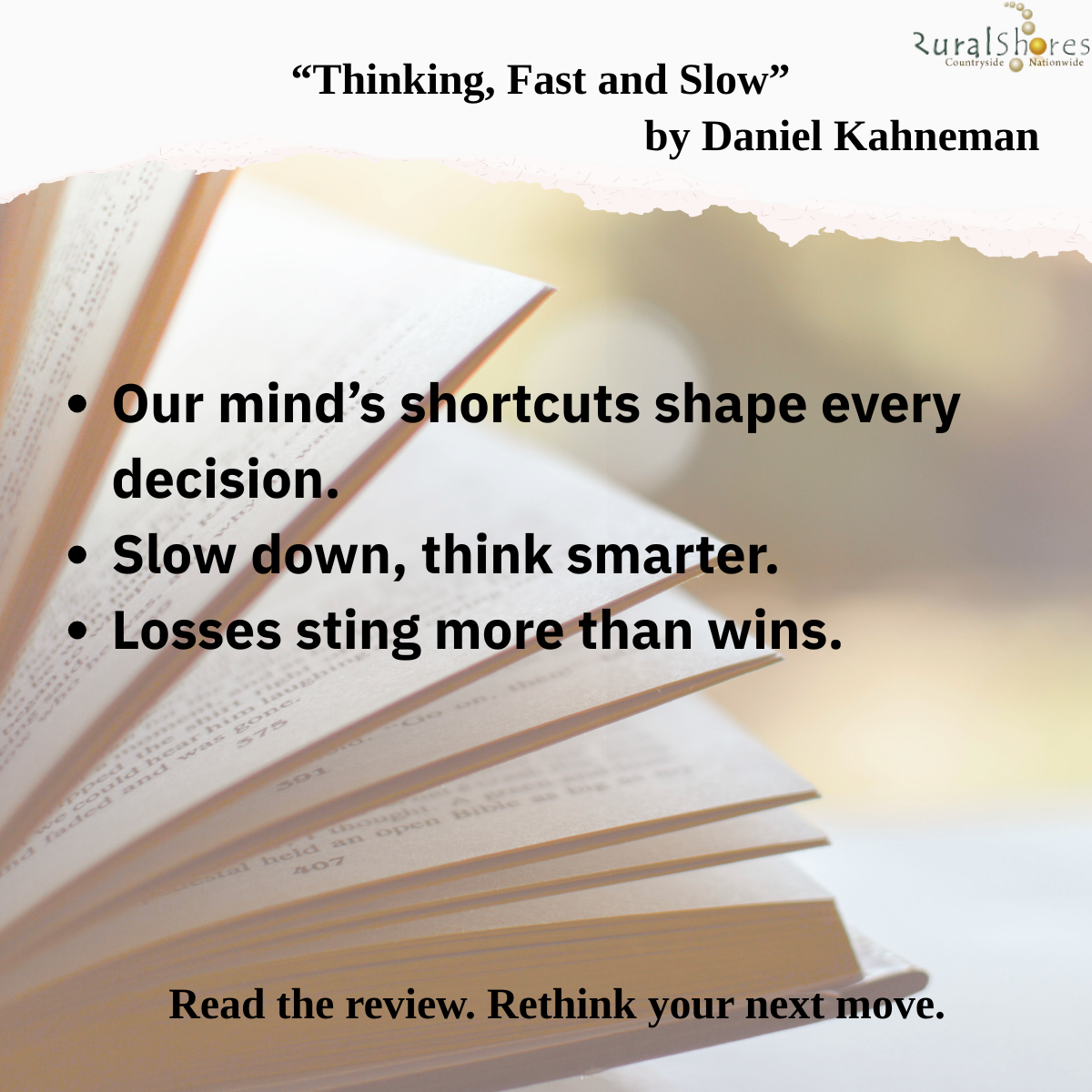
Ever wondered why even experienced businesspeople make predictable mistakes? Why do you sometimes contradict your own decisions, while at other times you carefully analyse everything? What if your mind is playing tricks on you in both situations?
I recently finished reading Thinking, Fast and Slow by Nobel laureate Daniel Kahneman. Which eventually made me think that what if my daily decisions weren’t truly thoughtful-just quick judgments shaped by habit, memory, and hidden bias?
I picked up out of curiosity about the strange twists and turns in my own thinking. This book takes you inside the invisible gears of the human mind and shows that we’re not as rational as we imagine.
Kahneman says we rely on two “systems”:
System 1 is fast, automatic pilot that handles everything from simple math to snap judgments about a stranger’s smile.
System 2 is slow, deliberate thinker we use for tough problems-like planning a career shift or analysing business strategy.
But here’s the kicker: most of the time, our minds run on autopilot, using clever shortcuts that save time but leave us open to predictable errors based on our habits or experiences.
For example, we tend to trust vivid stories and recent memories more than logic or statistics, and the first piece of information we get, can influence even unrelated decisions.
Have you thought why losses hurt more than gains?
Losing ₹1,000 stings more than winning. This “loss aversion” can make even smart people overly cautious, ignoring potential rewards.
Another powerful idea is “framing”: the way a choice is presented changes our decision, even when nothing else changes. Kahneman’s experiments reveal how easily our preferences can shift based on wording or context, whether it’s buying insurance or voting on policy.
Reading this book made me rethink moments when I’d rushed to judge, missed important details, or repeated mistakes without knowing why. Now, I catch myself before making snap decisions, asking if my answer is just the first thing that popped into mind or the result of honest reflection – I try to stop-breath and think before just jumping on a decision.
In my work, taking a moment to slow down-especially with complex projects or team decisions-has already made a difference. It’s surprising how a quick pause allows the slower, more thoughtful part of your mind to step in and offer better ideas & solutions.
This book of Kahneman’s is for anyone who leads teams, manages risks, negotiates, or simply wants to understand how the mind works. You will find it practical and eye-opening. If you’ve ever wondered why smart people sometimes make silly mistakes or why you feel stuck repeating the same errors, this book is for you. You will see the hidden patterns behind your thinking.
If you’ve read Thinking, Fast and Slow, I’d love to hear what shifted for you-or which ideas stuck with you most. And if you have other book recommendations about decision-making or psychology, share them below. Engaging with these insights really does make every decision a little smarter, a little better.
Created By: Vineeta Kushwaha