

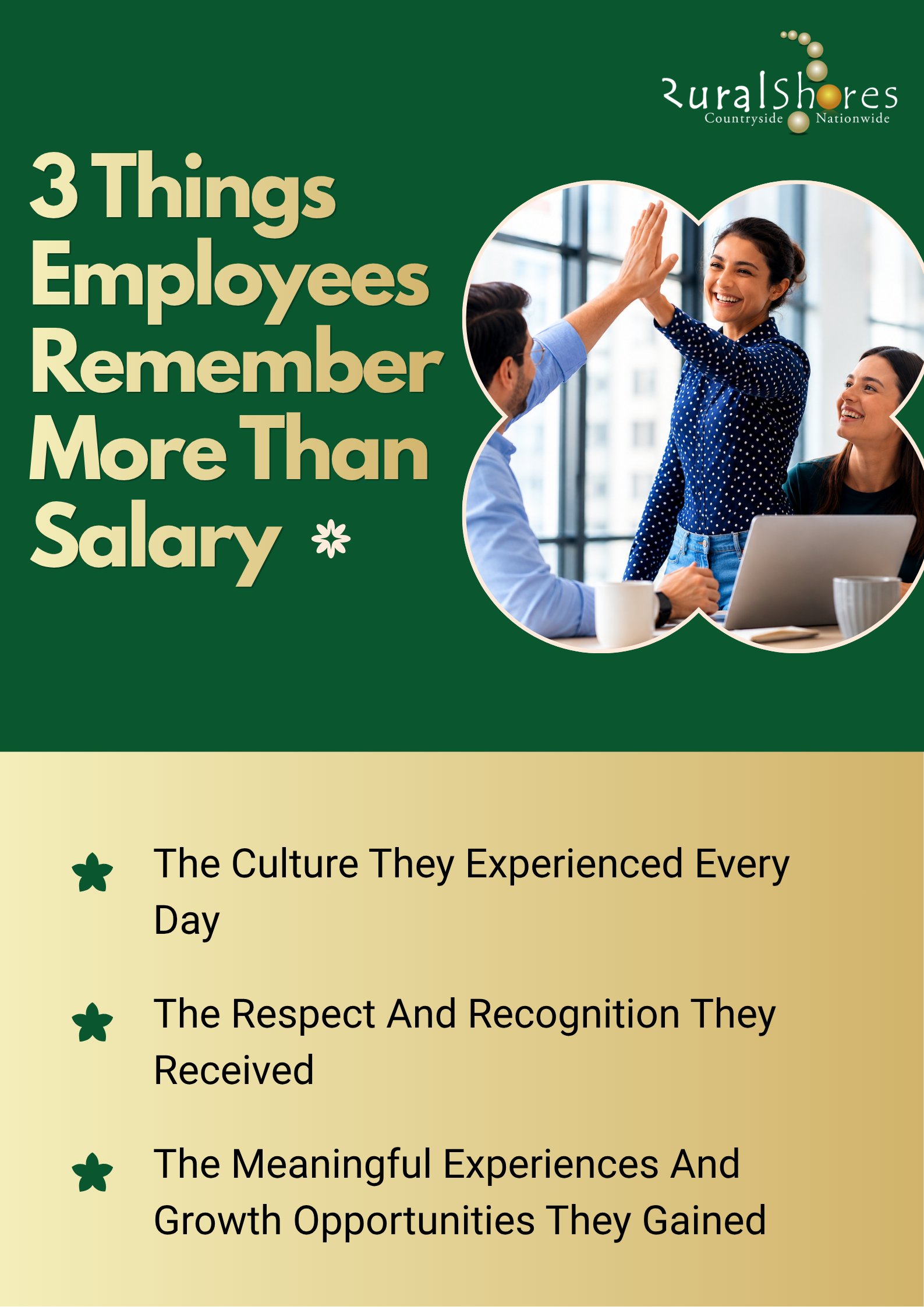
Salary may attract talent, but it is rarely what people remember most about their careers. Years later, employees usually recall something deeper: the culture they worked in, the respect they received, and the opportunities that helped them grow. For leaders, that is an important reminder – compensation opens the door, but experience determines whether people stay, perform, and speak positively about the organization.
However, when employees look back on their careers years later, their strongest memories are rarely centered on the exact amount they earned. Instead, they remember how they were treated, how they felt while working, and whether their contributions mattered.
Organizations often invest significant effort in designing compensation structures, yet some of the most powerful drivers of retention, engagement, and advocacy lie beyond paychecks. Employees who feel valued, respected, and connected to a meaningful purpose are more likely to stay longer, perform better, and become ambassadors for the organization.
For CEOs and business leaders, this presents an important leadership lesson: salary attracts employees, but culture, respect, and meaningful experiences are what make them stay and remember the organization positively.
Here are three things employees remember more than salary.
1. The Culture They Experienced Every Day
Culture is not defined by values written on walls; it is defined by the behaviors people see every day. Employees remember whether leaders were consistent, whether teams trusted one another, and whether the environment encouraged accountability or fear. Even competitive pay cannot fully compensate for a workplace that feels toxic, uncertain, or politically charged.
For CXOs, culture is not an HR theme – it is a business outcome. It influences retention, execution speed, collaboration, and ultimately the organization’s reputation as an employer. Leaders who treat culture as a strategic lever are far more likely to build teams that stay engaged and perform at a higher level.
Employees may forget their annual increment percentage, but they rarely forget how the workplace made them feel. They remember whether collaboration was encouraged or competition was unhealthy. They remember whether leaders were approachable or distant. They remember whether people felt safe expressing opinions or were afraid of making mistakes.
A positive culture creates an environment where employees can perform at their best. It builds trust, encourages innovation, and fosters a sense of belonging. In contrast, even highly paid employees can become disengaged when they work in environments characterized by toxicity, favoritism, or constant uncertainty.
Research consistently shows that employees leave managers and workplace cultures more often than they leave organizations. A company may offer attractive compensation packages, but if the day-to-day experience is frustrating or demotivating, retention becomes increasingly difficult.
For business leaders, culture should not be viewed as an HR initiative – it is a strategic business asset. Every leadership decision, communication, and action contributes to shaping it.
Stronger CEO actions
- Set and model a few non-negotiable leadership behaviors.
- Review team culture through regular listening mechanisms.
- Hold managers accountable for how results are achieved, not just what is achieved.
- Reward collaboration, transparency, and ownership.
- Address toxic behavior early, before it becomes normalized.
When employees reflect on their careers, they remember whether they looked forward to coming to work or counted the hours until they could leave. That memory often outweighs any salary figure.
2. The Respect and Recognition They Received
Respect is one of the most fundamental human needs in the workplace. Regardless of position, experience level, or compensation, employees want to feel valued as individuals and contributors.
People remember leaders who listened to their ideas, trusted their judgment, and treated them with dignity. Likewise, they remember instances where their efforts went unnoticed or where they felt ignored despite delivering results.
Recognition does not always require financial rewards. A sincere acknowledgment, public appreciation, or a simple expression of gratitude can have a lasting impact. Employees want to know that their work matters and that their contributions are seen.
Many organizations underestimate the power of recognition because it seems simple. Yet its impact on morale, engagement, and loyalty can be profound. Employees who feel respected are more likely to take ownership, collaborate effectively, and remain committed during challenging periods.
Respect also extends beyond recognition. It includes fairness in decision-making, equal opportunities for growth, transparent communication, and genuine concern for employee well-being.
Leaders often remember strategic decisions and business outcomes. Employees, however, frequently remember how leaders made them feel during those moments.
What CEOs Can Do
- Build a culture where recognition is frequent and meaningful.
- Train managers to provide constructive feedback and appreciation.
- Ensure fairness in promotions, rewards, and development opportunities.
- Listen actively to employee concerns and suggestions.
- Demonstrate respect through everyday interactions, regardless of hierarchy.
Years later, employees may not recall the exact amount of a bonus, but they often remember the leader who publicly recognized their efforts during a critical project or stood by them during a difficult time.
3. The Meaningful Experiences and Growth Opportunities They Gained
Employees increasingly seek more than a job; they seek experiences that contribute to their personal and professional growth. They want opportunities to learn, solve meaningful challenges, build relationships, and make an impact.
The projects employees work on, the mentors they learn from, and the milestones they achieve often become defining moments in their careers. These experiences create stories they share long after they have left the organization.
Meaningful work gives employees a sense of purpose. When people understand how their contributions connect to a larger mission, they become more engaged and motivated. They feel that their efforts create value beyond individual tasks.
Similarly, opportunities for growth leave lasting impressions. Employees remember organizations that invested in their development, trusted them with responsibilities, and helped them build new skills.
In contrast, employees who feel stagnant often begin searching for opportunities elsewhere, regardless of salary increases. Growth and purpose are powerful motivators because they address long-term aspirations rather than short-term financial needs.
For CEOs and business leaders, creating meaningful employee experiences requires intentional effort. It means moving beyond transactional employment relationships and building environments where people can thrive.
What CEOs Can Do
- Provide clear career development pathways.
- Invest in learning and skill-building initiatives.
- Offer employees opportunities to lead projects and take ownership.
- Communicate how individual roles contribute to organizational goals.
- Encourage mentorship and cross-functional collaboration.
When employees look back on their careers, they often remember the opportunities that helped them grow into better professionals and leaders. These experiences become part of their personal journey and remain valuable long after salaries are forgotten.
The Leadership Imperative
In today’s competitive talent landscape, organizations cannot rely solely on compensation to attract and retain high-performing employees. Salary remains important, but it is rarely the factor that creates lasting loyalty or positive memories.
Employees remember:
- The culture they experienced.
- The respect and recognition they received.
- The meaningful experiences and growth opportunities they gained.
These elements influence how people feel about their work, their leaders, and the organization as a whole. More importantly, they shape whether employees become advocates who speak positively about the company long after they leave.
For CEOs and business leaders, the question is not whether salary matters – it does. The real question is whether the employee experience provides enough value beyond compensation to create genuine commitment and lasting impact.
Organizations that succeed in building strong cultures, treating people with respect, and creating meaningful experiences gain more than employee retention. They earn trust, strengthen engagement, and build reputations that attract future talent.
What employees remember most is not the size of their paycheck, but whether the organization made them feel respected, trusted, and able to grow.
Authored by: Abhinav Bajaj