

For years, training has been treated as a cost on the balance sheet. But smart leaders are changing that perception. They see training not as a line-item expense but as a long-term investment that fuels growth, improves retention, and positions their company ahead of the competition.
The reality is simple: in today’s fast-changing world, the ability to learn faster than your competitors may be the only sustainable advantage. And it starts at the top.
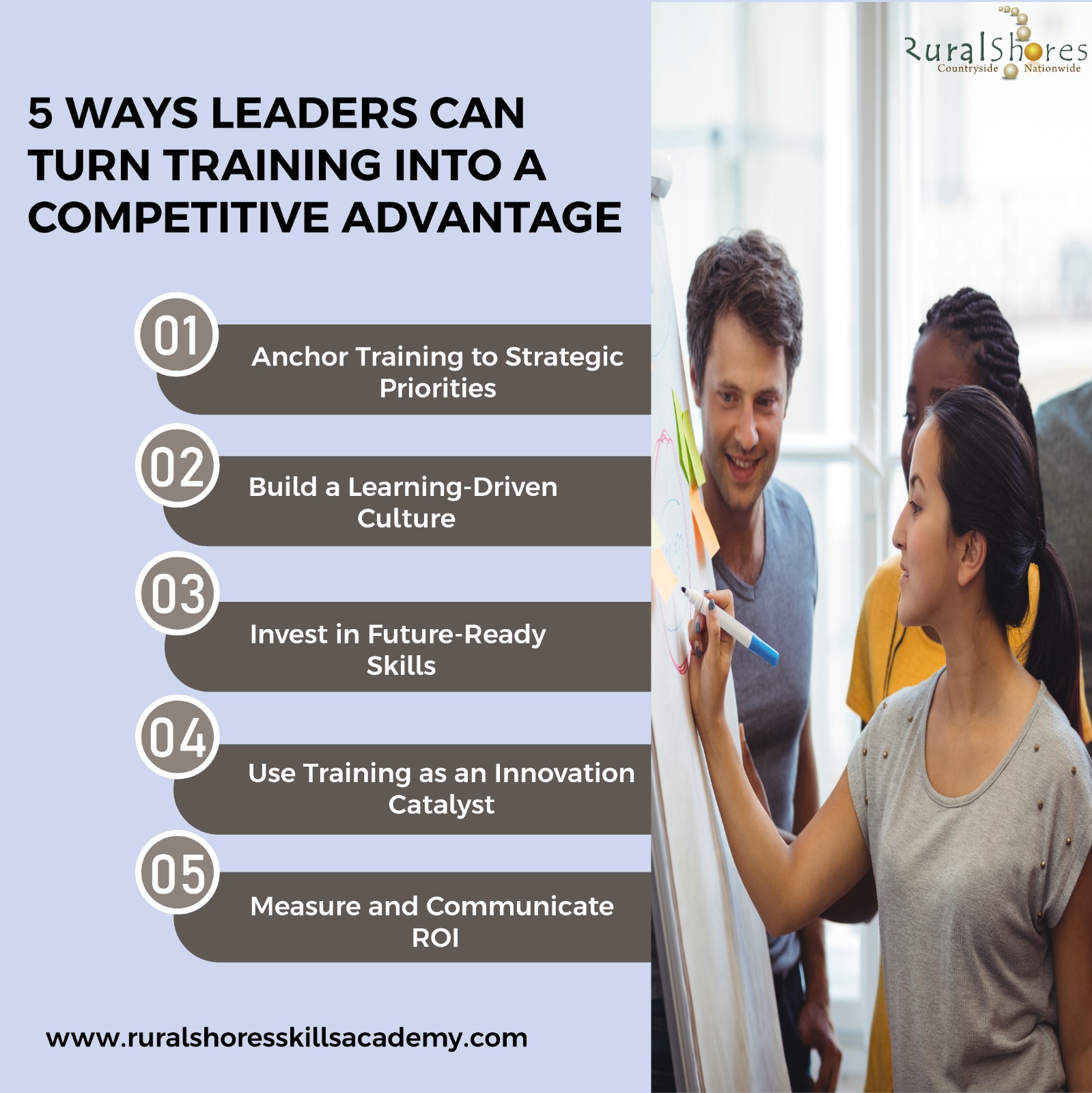
Here are five ways leaders can turn training into a true competitive advantage:
1. Anchor Training to Strategic Priorities
Training should never be a tick-the-box exercise. If it is not tied to business strategy, it becomes irrelevant very quickly. As a leader, it helps to ask whether a program will serve customers better, drive digital adoption, or prepare the company for expansion into new markets. When training directly supports such goals, it becomes a growth multiplier.
Consider a retail chain that equips its staff with digital payment skills. This is not just about upskilling employees but about creating smoother customer experiences and faster market penetration. PwC’s CEO survey points out that most leaders already view critical skills as a direct barrier to growth, which is why connecting training with strategy cannot be left to chance. The practical suggestion here is simple: review every training initiative against a key business priority and ensure leaders, and not just HR/L&D , are involved in shaping it.
2. Build a Learning-Driven Culture
Culture flows from the top, and when leaders demonstrate that learning is important, employees follow. A CEO who takes part in workshops, shares personal learning, or mentors rising managers sends a clear signal that growth is everyone’s responsibility.
Microsoft’s transformation under Satya Nadella illustrates this well. His push for a “learn-it-all” culture helped re-energize the company and is often credited as one of the drivers behind its massive growth over the past decade. What this shows is that learning culture is harder for competitors to copy than products or processes. The challenge, of course, is keeping it alive when short-term pressures demand attention. The advice here is to make “curiosity” visible in leadership behavior and encourage small, continuous learning habits across the organization rather than relying only on formal programs.
3. Invest in Future-Ready Skills
The skills that served your business yesterday may not secure its future tomorrow. Leaders who prepare their workforce for what is coming, such as digital fluency, data-driven decision-making, adaptability, and collaboration, create organizations that can pivot when disruption strikes.
The World Economic Forum estimates that half of all employees will need some form of reskilling within the next few years. The key question is how to decide which skills matter most. Start by looking ahead: study where your industry is moving, identify changing customer needs, and note where competitors are investing. Working with HR and business heads to run simple skills forecasting discussions can reveal the two or three capabilities most critical for your company’s next phase of growth.
Artificial Intelligence is a good example. Every company is exploring it, but not every company needs AI engineers. The focus should be on where AI meets your business model. For a retailer, that might be personalization or inventory optimization. For a bank, it could be risk analytics or customer service automation. Clarity here ensures that training investments strengthen your real competitive edge.
4. Use Training as an Innovation Catalyst
Training is often framed around efficiency, but it can just as easily spark innovation. When employees are exposed to new methods or cross-functional projects, they begin to view challenges differently.
Take design thinking as an example. Manufacturing companies that trained their teams in this approach not only streamlined processes but also generated fresh product ideas. Unilever has experimented with giving employees access to short-term internal projects that expose them to different teams and challenges, which has encouraged both learning and creativity. The lesson for leaders is that training can be designed not only to improve performance but also to open doors to innovation. That shift in mindset turns learning into a business accelerator.
5. Measure and Communicate ROI
At the executive level, results matter. Training should be tracked with the same seriousness as any other strategic initiative. Counting how many people attended is not enough; what matters is whether performance improved led by innovation, errors dropped with improved focus, or customer satisfaction rose with the product or service exceeding expectations.
Some organizations use simple dashboards to connect training investments with business metrics. Others prefer storytelling. Sharing how a sales training program directly lifted revenue or how a leadership workshop reduced attrition in a high-turnover unit helps people across the company see the value clearly. Measurement may never be perfect, but consistent communication builds trust that training is not a cost center but a performance driver.
The Leadership Commitment
In the end, turning training into a competitive advantage is not about bigger budgets or longer courses. It is about leadership commitment. When CEOs and senior leaders place learning at the heart of strategy, it changes everything. Employees feel valued, innovation thrives, and the company moves ahead with greater speed and confidence than its rivals.
Training is not just about preparing people for their jobs today. It is about preparing the organization for tomorrow. Leaders who understand this do not just stay ahead of the curve. They define the curve.
So here is a question for you: In your view, what is the single most important way leaders can ensure that training truly drives business growth?