

In 2016, a global bank faced a compliance crisis that cost millions. The rules were clear. The training was mandatory. The systems were in place.
So why did the failure happen?
Because when employees spot early warning signs, they hesitate.
One manager worried she might be overreacting. Another assumed someone more senior would handle it. A third simply froze, unsure if raising the issue would backfire.
That hesitation-not ignorance-was the real risk.
The Confidence Gap in Compliance
Picture this: A mid-level employee notices something odd in a vendor’s payment request. The numbers don’t break policy, but they don’t feel right.
What happens next depends entirely on confidence.
- A confident employee escalates the issue.
- An uncertain employee second-guesses themselves: “Maybe I misunderstood.” “I don’t want to create noise.” “Someone else probably reviewed this.”
That pause is where risk begins.
Research backs this up. The Ethics & Compliance Initiative found that 49% of employees witness misconduct, yet many stay silent out of fear or uncertainty. PwC and Deloitte studies show that organizations with strong “speak-up cultures” catch issues earlier and reduce exposure.
The difference isn’t policy. It’s confidence.
Why Confidence Strengthens Compliance
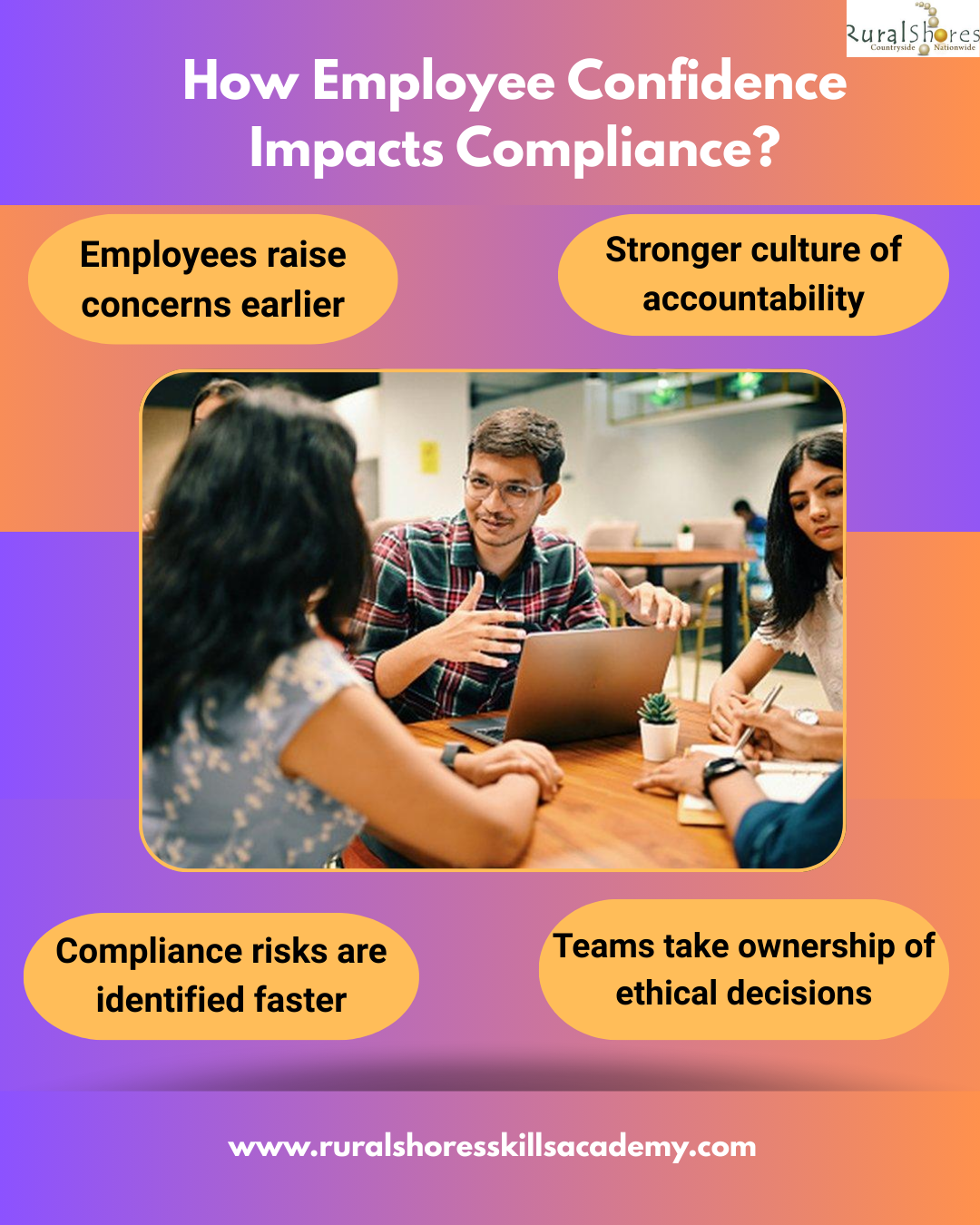
- Confident Employees Act Faster in regulated industries, speed matters. A procurement manager who trusts their judgment escalates irregularities immediately. A finance professional who feels supported raises concerns early.
- Confidence Reduces Mistakes Uncertainty breeds errors. Gallup studies show confident employees perform more accurately and efficiently. They don’t stall, over-consult, or misapply rules.
- Confidence Builds Accountability at one global tech firm; leadership began publicly recognizing employees who raised ethical concerns-even when it slowed projects. Within a year, reporting surged. Compliance became culture, not just policy.
The Leadership Imperative
Confidence doesn’t appear by accident. CEOs and senior leaders shape it.
- Move Beyond Policy Training Scenario-based simulations and case studies prepare employees to act under pressure-not just memorize rules.
- Create Psychological Safety Leaders who encourage questions remove the stigma of “slowing things down.” Silence is far riskier than curiosity.
- Celebrating Ethical Decisions Storytelling is powerful. Sharing examples of employees who acted responsibly-even at personal cost-signals that doing the right thing is valued.
The Business Impact
Organizations that prioritize confidence see measurable gains:
- Stronger Risk Management – Issues escalated earlier.
- Operational Efficiency – Faster, more accurate decisions.
- Cultural Ownership – Compliance embedded in daily choices.
In today’s complex regulatory environment, rules alone are not enough rules alone. Confidence is the safeguard.
Final Thought for Leaders
Policies define the rules. But people decide whether those rules are applied when it matters most.
The organizations that thrive are those where employees feel capable, trusted, and supported to act.
Confidence isn’t just cultural. It’s strategic.
Authored by: Anamika Jha