

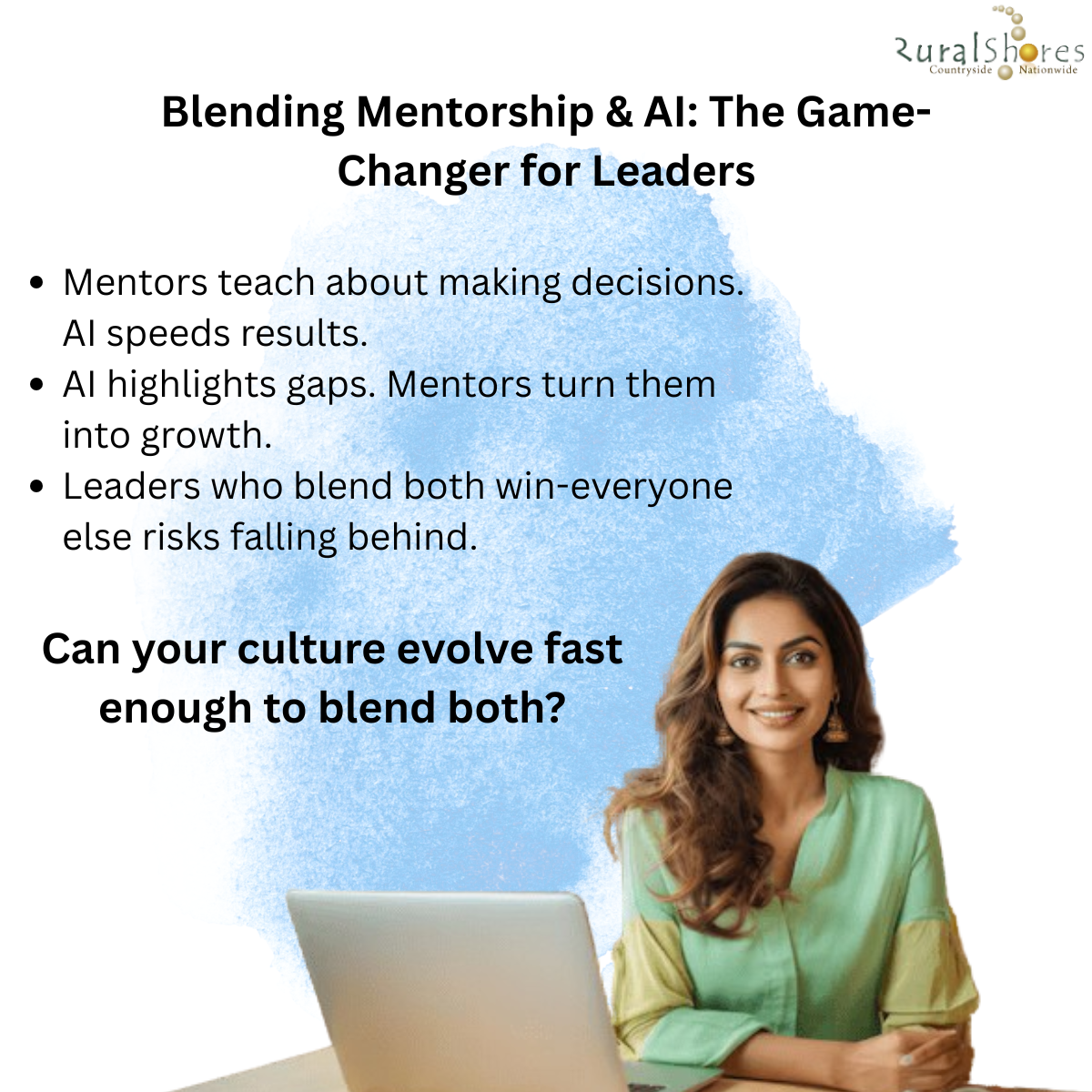
In today’s fast-changing, tech-driven world, many wonder if technology can replace mentors.
By “technology,” we mean AI tools, learning platforms, and analytics that guide learning through data and automation. But mentorship is about human insight, empathy, and judgment-qualities machines can’t replicate.
At Google, new managers combine both: AI pinpoints skill gaps, while mentors coach on decision-making and leadership. The result? Faster growth and measurable performance impact.
This isn’t an isolated example-it’s a signal.
Organizations that merge mentorship with technology are building adaptive learning ecosystems, not just training programs.
For instance, AI can quickly analyze performance data and suggest targeted learning modules, but a human mentor helps interpret that data-turning insights into leadership actions, guiding tough conversations, or building confidence after a setback.
Together, they make learning both faster and deeply personal
According to Stanford University research, companies adopting this blended model see 44.5% average revenue growth within three years. Those who don’t risk losing up to 75% of potential gains.
Where Mentorship Outperforms Machines
AI can personalize learning paths and suggest courses, but mentors guide people, not just data-shaping confidence, judgment, and decision-making.
Examples of where human mentorship matters:
- Contextual judgment: AI may flag a leadership gap, but a mentor helps a manager navigate a high-stakes client negotiation where emotions and politics matter.
- Ethical clarity: When layoffs or sensitive promotions arise, mentors guide values-driven decisions that AI cannot evaluate.
- Empathy & trust: Mentors help new team leads build rapport and credibility-shaping culture in ways algorithms cannot.
- Thinking patterns: Every learner processes information differently; mentors tailor guidance to match individual thought processes, helping avoid repeated mistakes.
That’s why companies like Accenture and IBM combine AI insights with human mentoring-scaling leadership capability while preserving the human touch.
Where Technology Supercharges Mentorship
Technology isn’t replacing mentors; it’s amplifying their reach and precision.
- AI-powered matching ensures mentors and mentees align by skill needs and personality.
- Learning analytics surface real-time performance trends, letting mentors intervene early.
- Simulated environments (like leadership or negotiation AI tools) allow mentees to practice safely-and receive human feedback that turns data into growth.
In short: AI provides insight; mentors provide wisdom.
The Business Case for Blended Mentorship
Blending human and digital learning is no longer just a “people initiative”-it’s a strategic lever for business growth.
- Accelerated leadership pipelines: AI identifies skill gaps and delivers targeted learning modules in days, while mentors help high-potential employees apply these skills in real projects, reducing time-to-readiness by up to 25%.
- Higher engagement & retention: According to Gallup, employees in mentorship-driven programs are up to 51% less likely to leave, translating directly into cost savings on hiring and training.
- Organizational agility: Personalized learning and mentor-guided problem-solving enable teams to innovate faster-for example, cross-functional teams trained via blended programs at IBM reported a 30% faster product iteration cycle.
How Leaders Can Apply This
- Embed mentorship analytics in your L&D dashboards-track not just completion rates, but behavior change.
- Use AI tools like CoachHub, Together, or ChatGPT to identify growth areas, while pairing employees with mentors who bring real-world perspective.
- Reward mentors as strategic enablers, not volunteers. Mentorship should be tied to leadership KPIs.
The Future Belongs to Balanced Learning
The question isn’t whether AI can replace mentors-it’s how to use both effectively.
AI accelerates learning, identifies gaps, and provides data-driven insights. Mentors interpret those insights, guide judgment, and build confidence.
Together, they ensure leaders don’t just learn faster, but learn better, making organizations truly adaptive in a fast-changing world.
For leaders, the real question is:
“Can your culture evolve fast enough to blend AI and mentoring effectively?”
Authored By: Vineeta Kushaha