

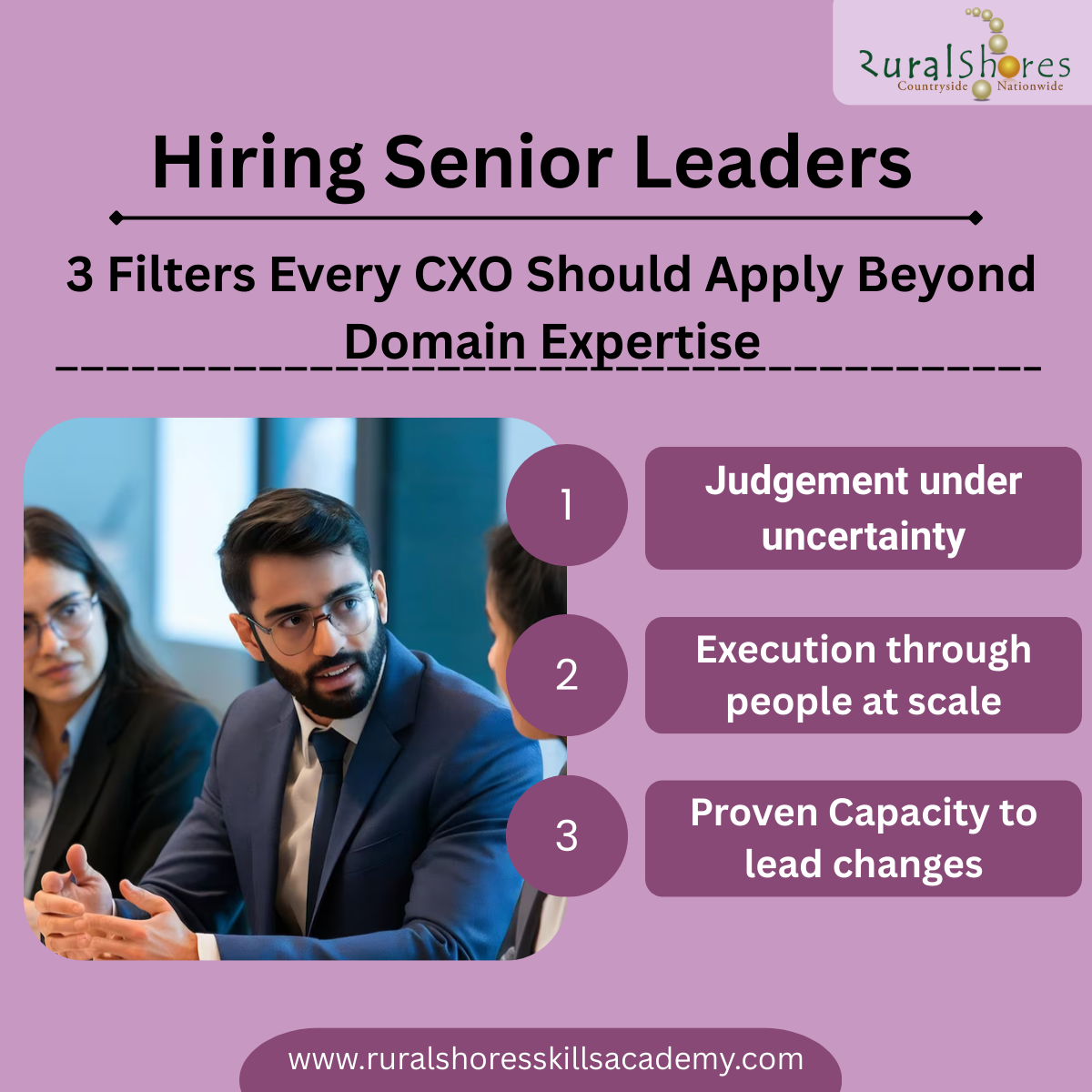
Most senior leadership resumes highlight experience.
Roles held. Businesses managed. Targets delivered.
Strong hires demonstrate something deeper.
How they think. How they decide. How they lead when conditions are unclear.
A weak senior hire doesn’t just miss targets. It quietly weakens strategy.
Business conditions are less predictable and more interdependent.
Plans age quickly. Decision errors are costlier. Execution gaps surface faster.
Which is why senior leadership hiring now demands sharper filters.
𝗝𝘂𝗱𝗴𝗺𝗲𝗻𝘁. 𝗔𝗹𝗶𝗴𝗻𝗺𝗲𝗻𝘁. 𝗧𝗿𝗮𝗻𝘀𝗳𝗼𝗿𝗺𝗮𝘁𝗶𝗼𝗻.
𝟭. 𝗝𝘂𝗱𝗴𝗺𝗲𝗻𝘁 𝘂𝗻𝗱𝗲𝗿 𝘂𝗻𝗰𝗲𝗿𝘁𝗮𝗶𝗻𝘁𝘆
Strong leaders don’t wait for perfect clarity. They take informed decisions with confidence when information is incomplete and stakes are high.
Look for candidates who challenge assumptions, assess downside risks, and act without data paralysis.
A business head reviewing aggressive expansion plans asks what could fail, how capital is protected in a downturn, and what contingency paths exist.
A functional leader presenting stable metrics still probes early warning signals, emerging risks, and blind spots outside formal dashboards.
Technical competence explains performance. Judgment protects the enterprise.
𝟮. 𝗘𝘅𝗲𝗰𝘂𝘁𝗶𝗼𝗻 𝘁𝗵𝗿𝗼𝘂𝗴𝗵 𝗽𝗲𝗼𝗽𝗹𝗲 𝗮𝘁 𝘀𝗰𝗮𝗹𝗲
Strategy rarely fails in design. It fails in organisational adoption.
Senior leaders must translate direction into coordinated execution across functions, geographies, and layers of management.
A transformation leader implementing a new operating model aligns business heads on intent, clarifies decision rights, and ensures teams understand how roles evolve.
A shared services head digitises workflows while building manager capability so the shift is actively led rather than quietly resisted.
Strategy lives or dies in middle management.
Execution is a people outcome.
𝟯. 𝗣𝗿𝗼𝘃𝗲𝗻 𝗰𝗮𝗽𝗮𝗰𝗶𝘁𝘆 𝘁𝗼 𝗹𝗲𝗮𝗱 𝗺𝗲𝗮𝗻𝗶𝗻𝗴𝗳𝘂𝗹 𝗰𝗵𝗮𝗻𝗴𝗲
Operational excellence sustains performance. Transformation creates advantage.
Priorities leaders who have led visible, high-stakes change that reshaped how the business operates.
A senior operations leader exits loss-making units while launching new revenue lines and redeploys teams through structured re-skilling instead of reactive downsizing.
A technology leader moves enterprise initiatives from prolonged pilots to full-scale adoption and works cross-functionally to embed new ways of working.
Past transformation is the strongest predictor of future change leadership.
A strategic hiring question for CXOs
𝗜𝗳 𝗮 𝘀𝗲𝗻𝗶𝗼𝗿 𝗹𝗲𝗮𝗱𝗲𝗿 𝗰𝗮𝗻𝗻𝗼𝘁:
• 𝗗𝗲𝗰𝗶𝗱𝗲 𝘄𝗶𝘁𝗵𝗼𝘂𝘁 𝗽𝗲𝗿𝗳𝗲𝗰𝘁 𝗱𝗮𝘁𝗮
• 𝗠𝗼𝗯𝗶𝗹𝗶𝘀𝗲 𝘁𝗲𝗮𝗺𝘀 𝗮𝗰𝗿𝗼𝘀𝘀 𝘀𝗶𝗹𝗼𝘀
• 𝗟𝗲𝗮𝗱 𝗽𝗿𝗼𝘃𝗲𝗻 𝘁𝗿𝗮𝗻𝘀𝗳𝗼𝗿𝗺𝗮𝘁𝗶𝗼𝗻
You are hiring operational comfort, not strategic leadership.
The leaders you hire today determine how confidently your organisation navigates uncertainty, executes strategy, and competes tomorrow.
At RuralShores Skills Academy, we work with CXOs to build these capabilities within their leadership teams through focused leadership development training initiatives.
𝑪𝒓𝒆𝒂𝒕𝒆𝒅 𝒃𝒚: Sonal Arora