

A few weeks ago…
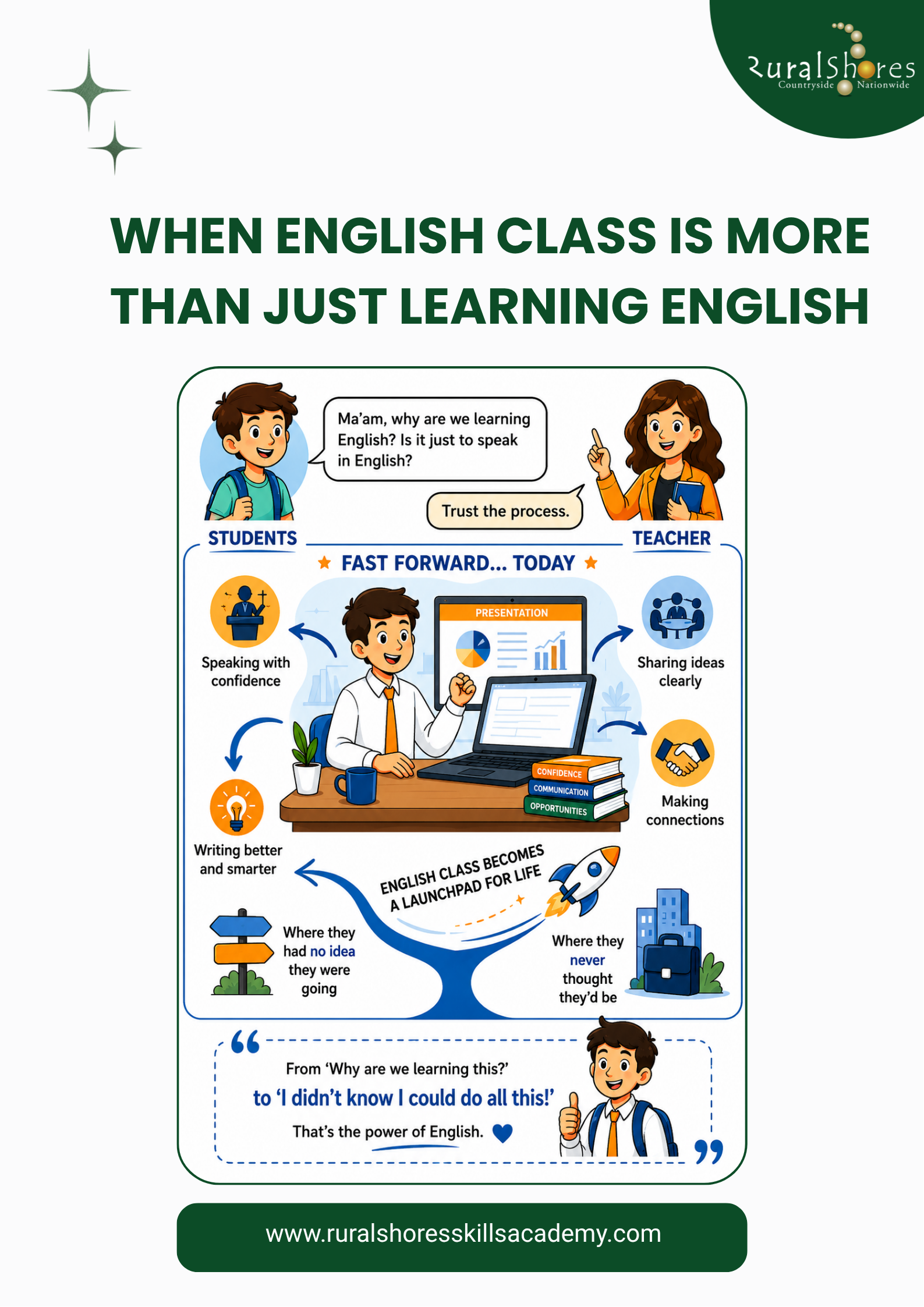
Student: “Ma’am, why are we making a weekly planner? This is an English class.”
Me: “Trust the process.”
Student: Looks at me with the expression of someone wondering if they accidentally walked into an art & crafts class instead of English class.
Fast forward a few weeks…
The same student is confidently introducing themselves, talking about their dream job, presenting their weekly planner with accurate sentence structures, and proactively presenting their projects.
But the biggest change is not just their English.
It is the way they connect learning with real life.
The weekly planner that began with a simple question mark became a tool for implementation, ownership, and action.
Learners started understanding the difference between where they had been, where they were today, and where they wanted to go next with the help of their own weekly planner
They were not just speaking correct sentences.
They were organizing their thoughts, expressing their goals, planning their actions, and taking ownership of their growth.
That’s when I know the learning has clicked.
At RuralShores Skills Academy, our English classes have a funny habit of transforming into something else.
One day, it’s an English class.
The next day, it’s a job interview.
Then it becomes a team meeting.
Sometimes it’s a travel plan.
Occasionally, it’s a product pitch.
And before anyone realizes it… learners are practicing real workplace communication instead of only memorizing grammar rules.
In the beginning, learners often ask:
“Why are we giving presentations?”
“Why are we doing mock interviews?”
“Why can’t we just learn grammar?”
A few weeks later…
They are introducing themselves with confidence.
They are asking thoughtful questions.
They are sharing their ideas in front of a room full of people.
And somewhere along the way, English quietly stops being a subject…
…and starts becoming a life skill.
The most rewarding moment for a trainer is watching learners move from:
“Ma’am, why are we doing this?”
to
“Ma’am, can I go first?”
Because that is when hesitation starts turning into confidence.
The goal of an English classroom is not just to teach learners how to speak.
It is to help them communicate their ideas, represent themselves professionally, and feel ready for opportunities beyond the classroom.
Because the best learning happens when learners don’t just understand a concept…
They use it.
What’s one project that seemed unusual at first but made complete sense once you experienced the real world?
Authored by: Neha Babbar